



Summary
Heat pumps have become one of the most popular heating and cooling solutions for homeowners, but misconceptions about their performance, efficiency, and cost still persist. This article separates fact from fiction by addressing common heat pump myths, including whether they work in cold weather, if they’re expensive to operate, and whether they can replace traditional heating systems. Understanding the facts can help homeowners make informed decisions about investing in a more comfortable and energy-efficient home.
Heat Pump Myths vs. Facts: Dispelling Common Misconceptions
Heat Pumps deliver tangible benefits, while at the same time reducing their home’s impact on the environment. As stated in the MIT Technology Review, heat pumps can produce three to four times as much heating and cooling energy as they consume in electric energy, achieving efficiency rates as high as 300% to 400%. With year-round performance, less maintenance, and longer lifespans than both furnaces and air conditioners, heat pumps have become one of the most popular types of heating and cooling systems. To help homeowners make an informed decision when purchasing a heat pump, we have cleared up some common misconceptions about them.
Myth 1: Heat pumps are only suitable for warm climates
Contrary to a common misconception, many heat pumps provide reliable and efficient heating in cold weather, including negative temperatures. It is important to work with a local professional contractor who can educate you and help you decide which system is right for your needs, based on your climate. Not all heat pumps are created equal; thus, some heat pumps will underperform when outside temperatures fall below freezing. As technology develops, we are seeing an increasing number of high-performance cold-climate and geothermal heat pumps that perform well in all conditions, even at negative temperatures.
Basic, entry-level heat pumps can operate and produce indoor heat with efficiency rates as high or higher than 100% if the outdoor temperature is above zero degrees. Once the outdoor temperature dips below freezing, many of these models are unable to perform at full capacity, and this can happen quickly, leaving you cold in your home. On Vancouver Island, we encourage homeowners to purchase high-performance, cold-climate heat pumps that consistently achieve 100% or higher efficiency during cooling months, even when outside temperatures dip below freezing.
If you currently use a gas-powered furnace for heating and switch to a heat pump, you might notice that it heats your home without drying out the indoor air. Heat pumps do not draw or exhaust any air into or out of the home, which leaves your humidity unaffected, unlike what you may experience with a gas-powered appliance.
Myth 2: Heat pumps only provide heating
Contrary to the name, heat pumps provide both air conditioning (AC) and heating. Like other central HVAC equipment types, they also provide some air filtration and humidity control (in AC mode). When the heat pump is in cooling mode, the indoor coil will sweat and dehumidify the indoor air stream. The condensation produced drains outside via a condensate drain or pump. All the air circulating through that enters a heat pump passes through an air filter, as well as keeping indoor humidity from climbing too high, it also reliably extracts some dust, dander, and other allergens and airborne particulates.
Central heat pumps are also compatible with integrated HVAC accessories. These are secondary units that can be installed on your existing HVAC system or in your ductwork, providing additional indoor air quality (IAQ) control, for example a UV air purification filter can be installed in your centrally ducted indoor unit. Thus, if you have growing or ongoing IAQ concerns, you can easily mitigate them by supporting your heat pump with a whole-house air purifier as needed.
Myth 3: Heat pumps are noisy
While older-style systems were known for their noisy operation, new inverter-based quality systems are much quieter, and the outdoor unit can be compared to the sound level of a dishwasher running in your house. In normal day-to-day operation, you will likely only hear the air moving through the fan. This is great news for your neighbours, who may have had sleepless nights before!
Myth 4: Heat pumps are expensive to install and maintain
In terms of installation cost, heat pumps are slightly pricier than gas furnaces. However, it is important to note that running costs may offset this initial expense, especially considering the upward trend in fossil fuel prices, which shows no sign of stabilizing. You will quickly realize the savings of reduced energy bills and year-round comfort with a heat pump.
As with all central HVAC equipment, airflow is paramount; that’s why we recommend heat pump filters be replaced or cleaned every 60 to 90 days to ensure the system can perform optimally. Additionally, it is important to ensure adequate clearance on all sides of the outdoor unit to ensure optimum airflow. Be mindful to remove any weeds, shrubs, grass, or other nearby foliage that may grow into the outdoor unit in the summer and keep a shovel’s width of ice and snow away from the outdoor unit in the winter.
To ensure the longevity of a heat pump and to maintain the manufacturer’s warranty, it is important to have a certified HVAC company provide annual maintenance on your system. During this routine appointment, a technician will check all equipment, connections, filters, and safety components. Routine maintenance can help you get the most out of your system for years to come.
Myth 5: Heat pumps are not effective in heating or cooling large spaces
You may be like many and believe that heat pumps are only meant for heating and cooling small spaces. Great news, due to their reliability and unmatched efficiency, heat pumps are a top choice for climate control in many large living spaces and are commonly used in commercial facilities. Like electric heaters, they do their work at a slow and steady pace. New and efficient heat pumps are designed to ‘set and forget’, they run gently to maintain a set temperature and produce an even and consistent temperature. Heat pumps will maintain the heat loss of your building, versus turning on and off multiple times like other heat sources.
To ensure that your heat pump can heat your entire home, it’s best to have it professionally sized and installed. When helping you choose your new heat pump, a professional will account for factors like your household size, the layout of your home, your ceiling heights, and your home’s envelope, among other factors, which will determine the head load requirements of your home.
Myth 6: Heat pumps are not environmentally friendly
Heat pumps are one of the most efficient ways to heat and cool your home. In fact, the International Energy Agency (IEA) recognizes heat pumps as one of the most efficient tools for meeting zero-emissions targets around the globe. According to the IEA, widespread use of Heat pumps for indoor climate control could reduce global carbon dioxide (CO2) emissions by half a gigaton by 2030, or roughly the emissions produced by millions of cars annually. It is a significant step towards combating climate change and reducing our global carbon footprint.
Locally in British Columbia, there is a current focus to move toward more energy-efficient heating by January 2030. Switching to a heat pump from fossil fuels is one of the most affordable and effective ways for homes to reduce carbon emissions.
Myth 7: Heat pumps require you to have ducted air vents
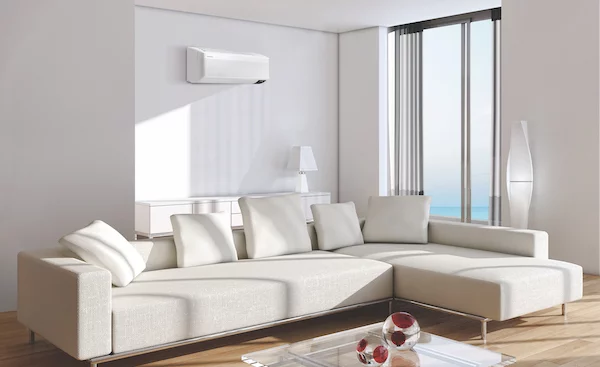
You’ll need ducted air vents to support a centrally ducted heat pump. However, if your home was built without HVAC ducts, you can install different types of ductless mini-split heat pumps instead. Ductless heat pumps offer zoned heating and cooling. Homes are divided into zones, which get a separate controller and air handler. Rather than routing heated or cooled air through long networks of metal ducting, ductless mini-split systems deliver conditioned air right where it’s produced. This means residents can selectively control temperatures in their immediate areas. This setup makes ductless mini-split heat pumps even more efficient than their ducted alternatives by eliminating ongoing, duct-related energy losses.
We’re helping homeowners lower their carbon footprints and optimize the comfort of their living spaces
Heat pumps are a top choice for residential heating and cooling, and with good reason. Not only are they energy-efficient, providing both heating and cooling, but heat pumps can also reduce your home’s heating and cooling bills by up to 50%. To find out more about the benefits of owning a heat pump, book an in-home estimate today!
Frequently Asked Questions
Do heat pumps work in cold climates?
Yes. Modern cold-climate heat pumps are designed to operate efficiently in freezing temperatures and can provide reliable heating even in winter. Advances in technology have made them suitable for climates across Canada and other cold regions.
Are heat pumps expensive to run?
Not necessarily. Heat pumps are highly energy-efficient because they transfer heat rather than generate it. Depending on local energy costs and the installation’s efficiency, many homeowners can reduce their overall heating and cooling expenses compared to conventional systems.
Do heat pumps only work with underfloor heating?
No. While underfloor heating can improve efficiency, heat pumps work very well with traditional radiators and ducted systems. Many existing homes can use a heat pump without requiring major changes to their heating distribution system.
Can a heat pump both heat and cool my home?
Absolutely. One of the biggest advantages of a heat pump is that it provides year-round comfort by heating your home in winter and cooling it in summer. Many systems also help reduce indoor humidity during warmer months.
Are heat pumps only suitable for new homes?
No. Heat pumps can be installed in both new and existing homes. With proper sizing and professional installation, they can perform effectively in older homes, even those without major renovations or extensive upgrades.